













Smart Workplace & V+C at Province of Gelderland
Workplace problems are rarely just workplace problems
On March 25, the Province of Gelderland welcomed the Smart WorkPlace network to the Huis der Provincie in Arnhem. Around 75 participants from provinces, municipalities, and private organisations took part in a session that looked at more than just facilities management alone.
During the session, Veldhoen + Company colleague Tim de Vos-Donkers and Farlon Hubner, program lead at Provincie Gelderland, shared the story of a collaboration that has been running for over fifteen years. They did not present a polished end result but offered an honest view of building a work environment that grows with the organization. Workplace transformation isn’t something that can be approached as a project. It must be a process; something that is constantly adapting to changes within the organisation.
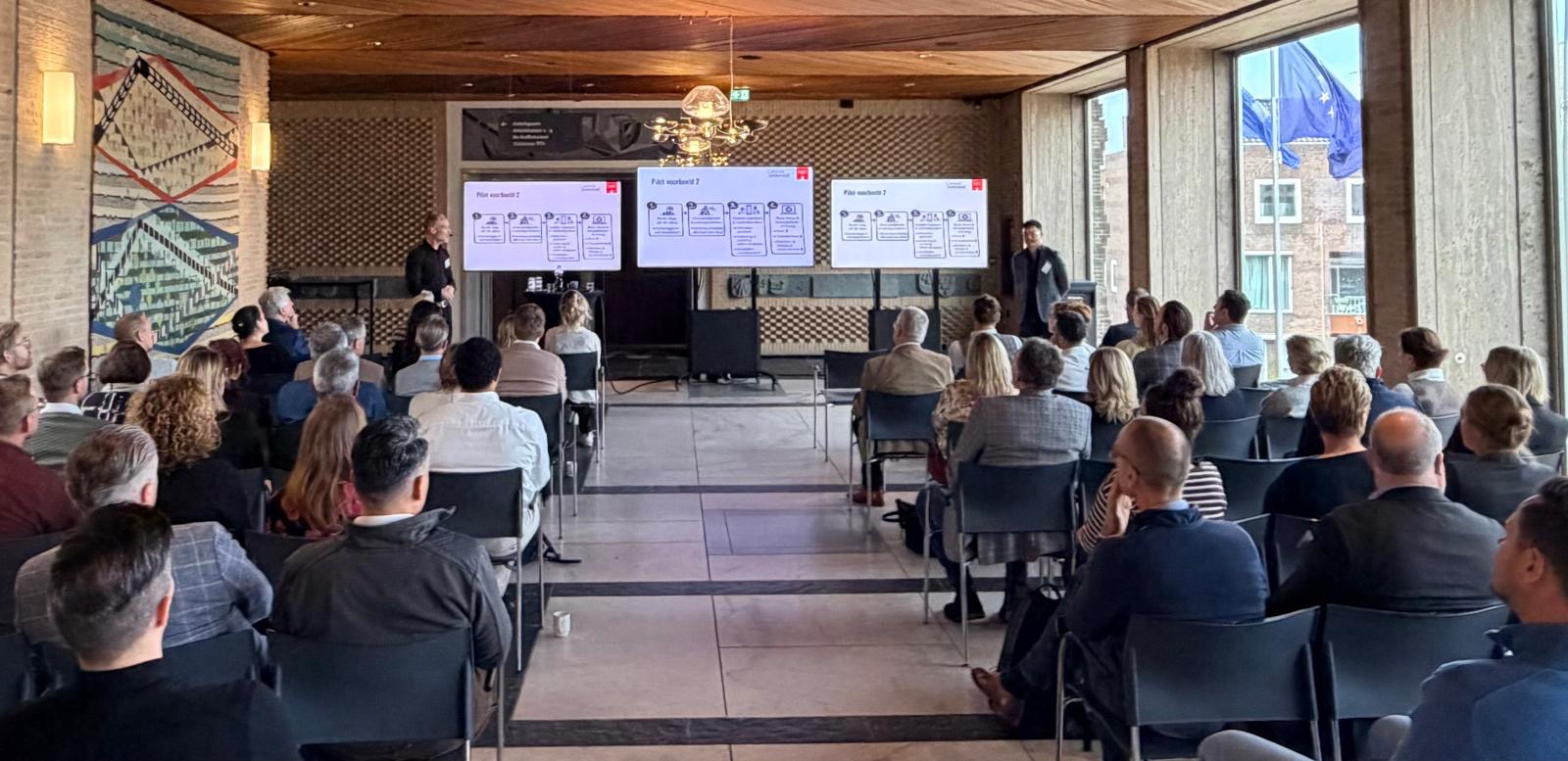
Presentation of Tim (Veldhoen + Company) and Farlon (Province of Gelderland)
One key takeaway from their story: workplace problems rarely stand alone. Issues like overcrowding, space-claiming behaviour, or inefficient room use typically stem from work patterns and behaviours that have developed over the years. Attempts to fix these issues were made through project-based work, but they didn't address the root of the problem. As a result, the Province of Gelderland opted for a broader approach.
The first step was to gain insight into the problems rather than jump straight to solutions. By collecting both quantitative and qualitative data, it became clear that there is a direct relationship between employees' experiences of their work environment and their ratings of productivity and well-being. The challenge turned out to be much broader than just real estate.
At the same time, it became apparent that teams differ considerably in their type of work, maturity, and context. That makes a one-size-fits-all approach ineffective.
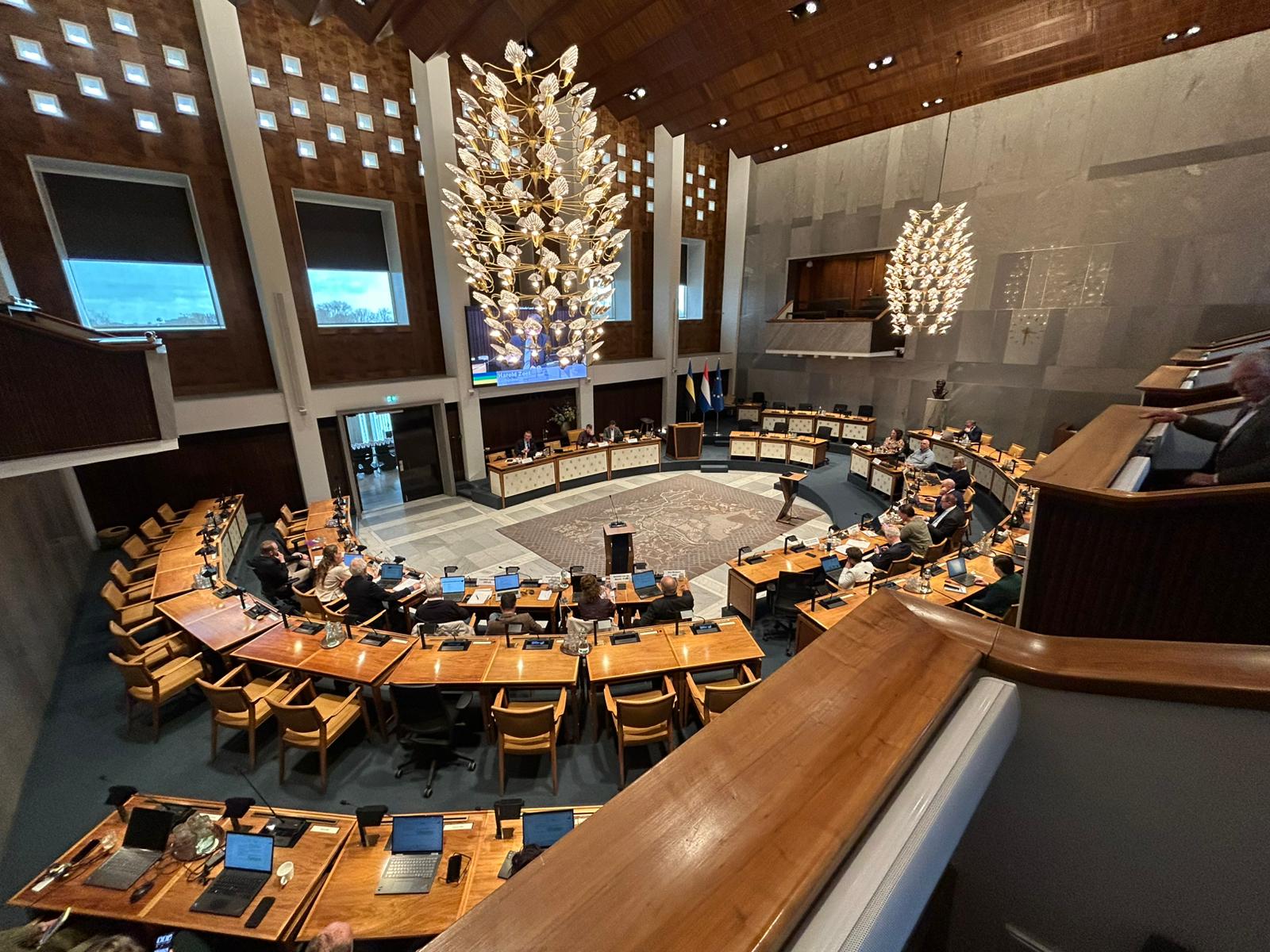
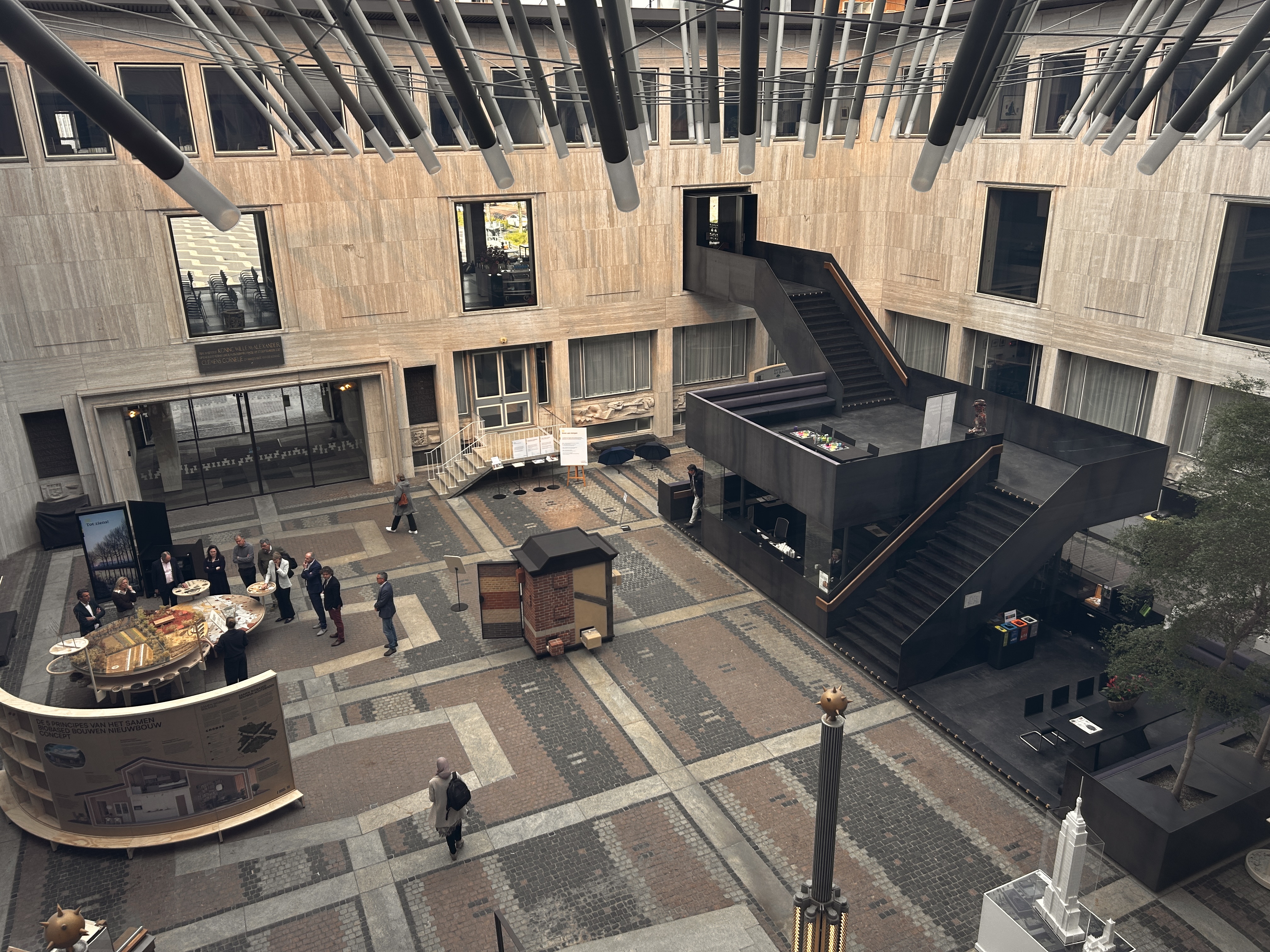
A tour of the Huis der Provincie
A learning-based approach was applied while working with five pilot groups: measure, understand, intervene, and learn. This short-cycle way of working created room to adjust along the way. Results varied per team, but the effects were visible. The teams experienced more peace, clarity, and collaboration, which is reflected in how they positively rated their productivity and the work environment.
This was reinforced by Wellbeing Expert Alexander Stolze, who showed during his session that vitality and wellbeing are not standalone interventions but must be structural parts of how an organisation works. Small, low-cost measures like walk-and-talks and intentional team rhythms make a real difference. The key is including these themes in decision-making early on, not as an afterthought.
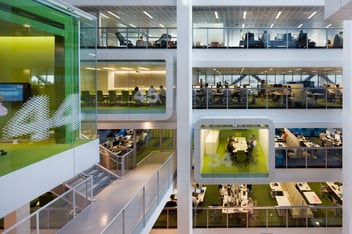
The value of an integrated approach became even more tangible during the tour of the Huis der Provincie. It showed how architecture and work concepts reinforce each other. The building, which has been a national monument since 2007, was renovated to connect the physical and organisational. Its spaces encourage desired behaviour, and insights into their use lead to further improvements.
The question that remains is: are you treating your work concept as a one-time project or as an evolving, adaptive process?
Does this reflect what you are seeing in your organisation? If you'd like to discuss how these concepts could benefit your workplace or need support adapting them, contact Tim de Vos-Donkers at tim@veldhoencompany.com or reach out to us for a conversation.