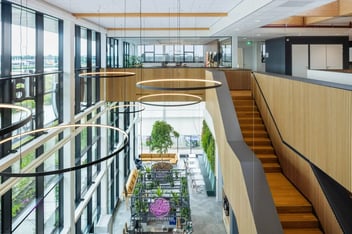

















Co-creation at a legacy site
Bridgestone Innovation Park: How ABW Is Supporting Co-creation at a Legacy Site
flagBridgestone
location_onTokyo - Manufacturing
121.400
employees
2026
looking back after 3 years
2.500
people in scope
Bridgestone transformed a factory site in Kodaira, Tokyo, into a global innovation hub. The goal was not just to build a better office, but to shift how 2,500 people work, think and connect, so that B-Innovation (BI), the co-creation heart of the Bridgestone Innovation Park, could function as a genuine engine for new ideas.
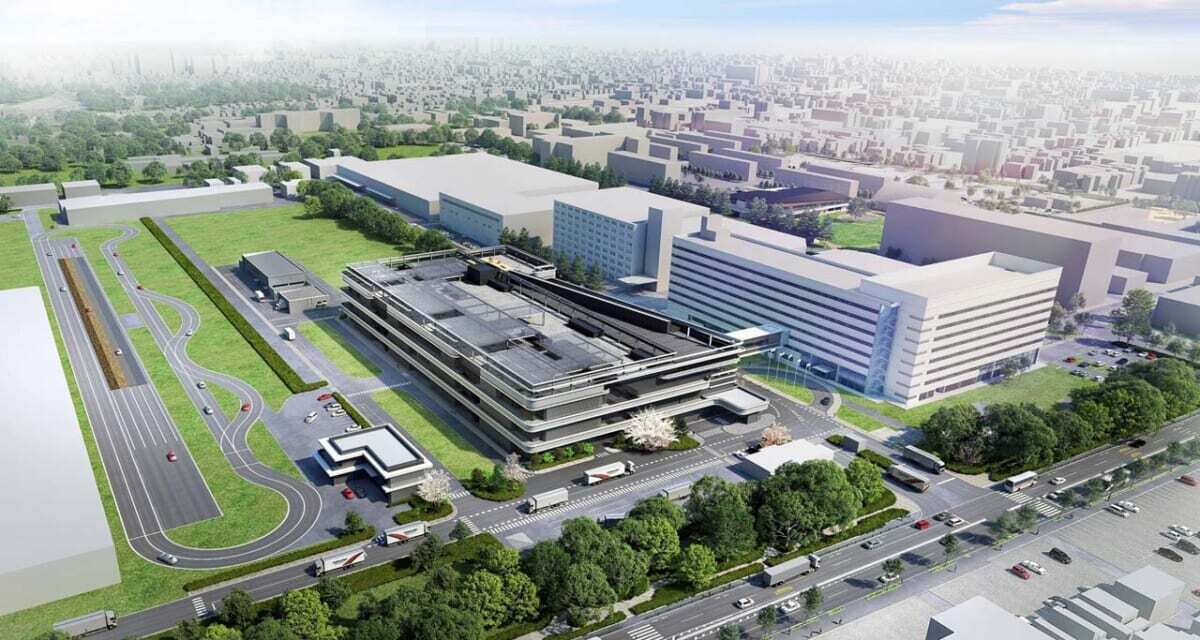
Our role
Veldhoen + Company developed the workplace strategy for BI and supported the organisation through the change, from first analysis to adoption after opening.
We worked with Bridgestone across three phases. In the research and analysis phase, we mapped current working practices across departments and assessed how Activity Based Working could be introduced. A key finding was that despite differences in job function, teams distributed their working activities in remarkably similar ways. That gave the project a solid, evidence-based foundation for every space and furniture decision.
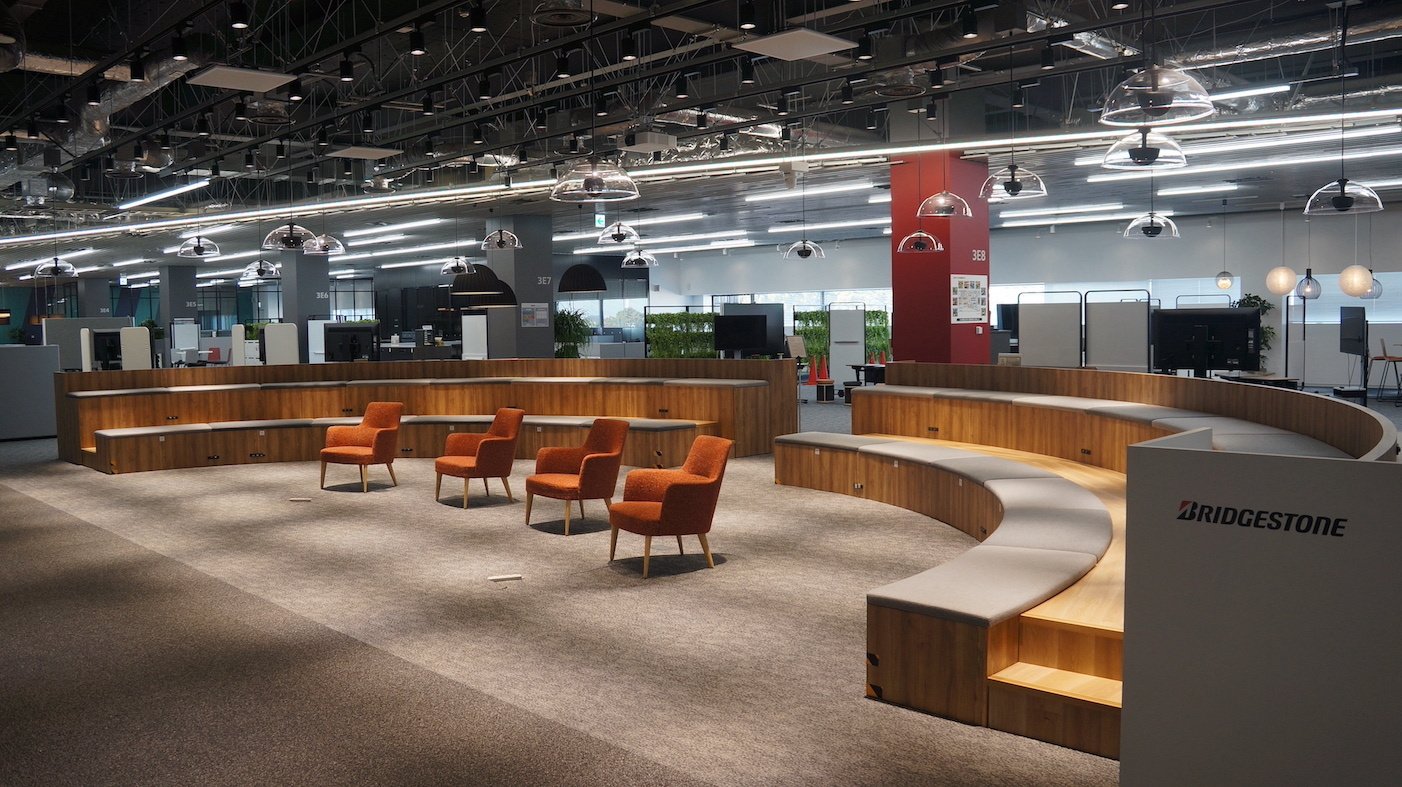
In the planning phase, stakeholder workshops shaped the requirements for the space. The team placed a central shared area called the Plaza at the heart of the floor, where most socialising and informal activity would take place. At either end, quieter focus areas created a natural gradient of sound and activity.
In the workstyle implementation phase, we rolled out a tailored training programma at every level of the organisation, from senior leadership workshops to online sessions for department heads and an e-learning programme for all employees. After opening, V+C continued to support adoption through newsletters and regular town hall meetings.
The Outcome
Three years after opening, three things have shifted.
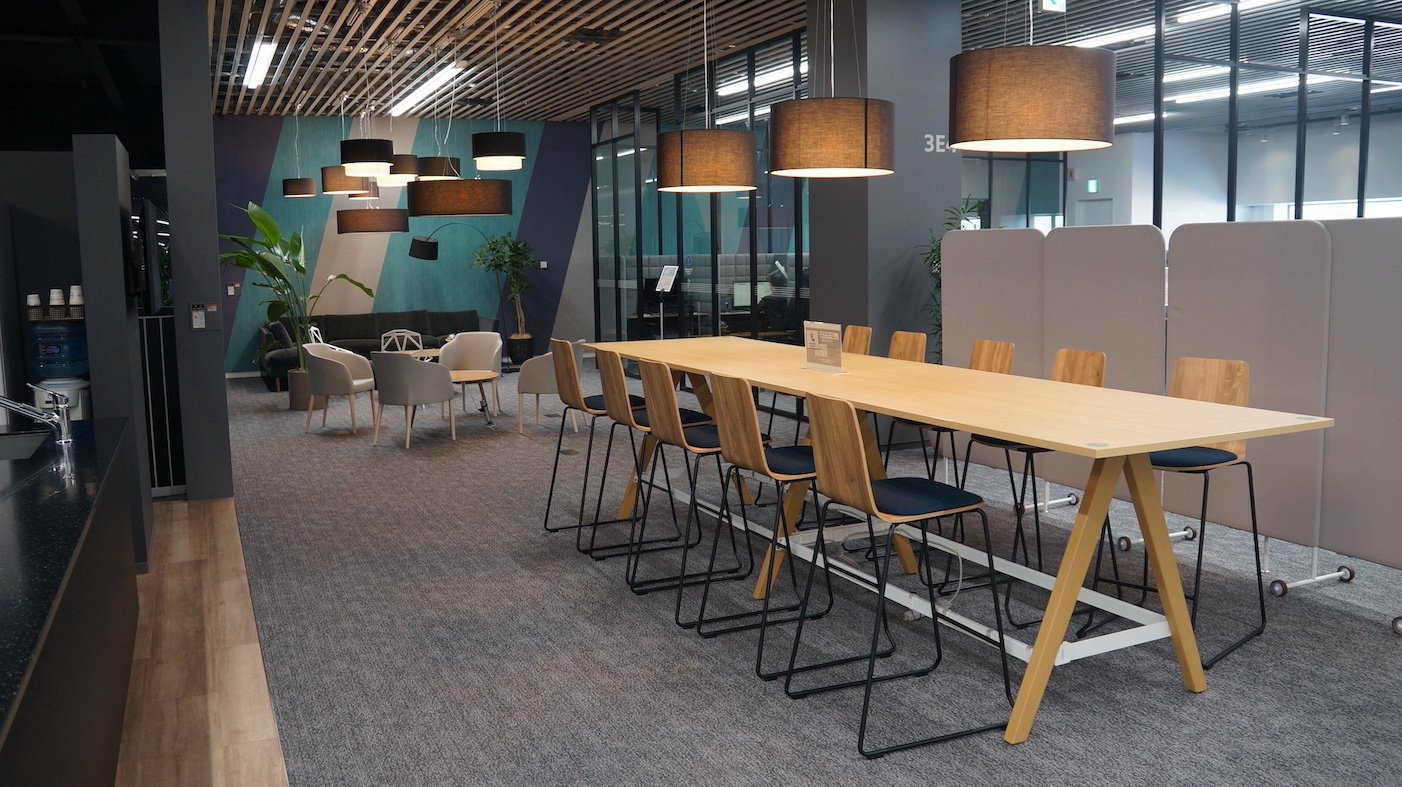
Employees actively choose their workspace. Teams now select spaces based on what they are doing, and many have reshaped their meeting habits. The acoustic zoning in BI, where the most social areas and the quietest ones sit at opposite ends of the floor, makes a practical difference to how focused and productive work feels day to day.
Collaboration became visible across departments. Sharing an open floor means people naturally encounter what other parts of the organisation are doing. Conversations in the Plaza spill out to people working nearby, and colleagues who would not normally cross paths now connect as a regular part of working life in BI.
Employees feel more in control of how they work. In the latest survey, more than 80% of respondents said they work autonomously without being tied to a fixed time or place, and actively choose their environment to improve both personal and team performance.
One of the most distinctive decisions the team made was to open BI at roughly 70% complete, deliberately leaving room for employees to shape the rest. They built in movable walls and modular furniture from the start. As one team member put it, if they had been aiming for 100 points, BI still would not have opened. That approach gave employees a genuine sense of ownership over the space and the change it represented.
Why It Matters
This case shows what it takes to shift organisational culture, not just floor plans. We are proud of three things in particular.
The strategy was grounded in data. Activity analysis from the research phase gave every design and layout decision an evidence base, which made it easier to build internal credibility and bring employees along.
Change communication was sustained over time. A single explanation is never enough to change how people work. Over three years, Bridgestone ran town halls, training, newsletters and fieldwork visits, all designed to make the benefits of change feel personal instead of abstract. Senior leaders spoke in their own words at every town hall, which kept the organisational commitment visible.
The space was built for evolution, not completion. Workplace transformation is not a project with an end date. By launching before everything was finalised and designing for flexibility from the start, Bridgestone built a culture where employees shape their way of working together, rather than having it handed to them.
For organisations considering a similar shift, this project shows how physical design, behavioural strategy and sustained communication reinforce each other when you treat them as one connected programme.